Commercial Kitchen Fires in Ontario: The Hidden Danger of Grease Buildup in Exhaust Systems post
ommercial kitchens in Ontario are fast-paced, high-heat environments where safety and cleanliness are critical. One of the most serious but often overlooked risks in these environments is grease buildup inside kitchen exhaust systems. Grease that accumulates in hoods, ducts, and exhaust fans can become a major fire hazard if not properly cleaned and maintained.
4/22/20262 min read
How Grease Builds Up in Kitchen Exhaust Systems
Every time food is cooked—especially frying, grilling, or sautéing—grease particles and vapors are released into the air. The kitchen hood captures these vapors and pulls them into the duct system.
Over time:
Grease cools and sticks to duct surfaces
Layers gradually build up inside the system
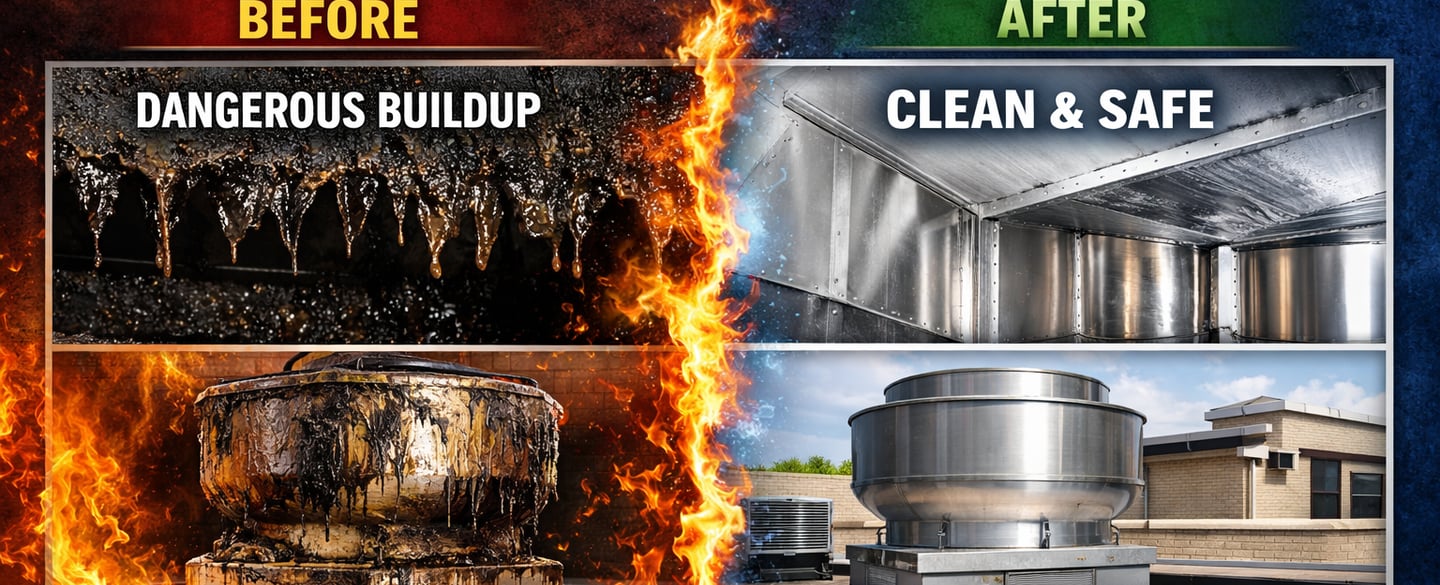
The buildup becomes thick, sticky, and highly flammable
This hidden accumulation often goes unnoticed because it forms inside ducts that are not visible during normal kitchen operations.
Why Grease Buildup Is So Dangerous
Grease inside exhaust systems acts like fuel waiting for ignition.
If a flame or high heat enters the system:
Fire is pulled into the kitchen hood
It travels through the ductwork rapidly
It can reach the roof exhaust fan within seconds
The fire may spread to other parts of the building
Because the fire is inside the ventilation system, it can spread quickly before being detected.
Ontario Fire Safety Requirements
Commercial kitchens in Ontario must comply with the Ontario Fire Code, which requires proper maintenance of exhaust systems.
Key requirements include:
Regular inspection and cleaning of kitchen hoods and ducts
Maintenance of fire suppression systems
Compliance with NFPA 96 standards for ventilation systems
Failure to follow these requirements can result in fire hazards, insurance issues, and potential fines.
Real Fire Risk in Commercial Kitchens
Fire safety data shows that cooking equipment is one of the leading causes of restaurant fires. A significant number of these incidents are linked to grease buildup in exhaust systems.
Common contributing factors include:
Lack of regular hood and duct cleaning
Heavy cooking activity (frying, grilling)
Poor maintenance of exhaust systems
These conditions increase the risk of fast-spreading fires through ventilation systems.
How Professional Hood Cleaning Reduces Risk
Professional kitchen exhaust cleaning removes grease buildup from:
Kitchen hoods
Ductwork
Exhaust fans
This process helps:
Reduce fire risk
Improve airflow and ventilation efficiency
Maintain compliance with fire safety regulations
Protect staff, customers, and property
Recommended Cleaning Frequency
Cleaning schedules depend on kitchen activity level:
High-volume kitchens (fast food, frying-heavy kitchens): Every 1–3 months
Moderate-volume kitchens: Every 3–6 months
Low-volume kitchens: At least once per year
A professional inspection can determine the appropriate schedule for each facility.
The Cost of Ignoring Maintenance
Failing to clean kitchen exhaust systems can lead to serious consequences, including:
Increased fire risk
Damage to equipment and property
Business downtime and revenue loss
Insurance complications
Regular maintenance is significantly more cost-effective than dealing with fire damage.
Conclusion
Grease buildup inside commercial kitchen exhaust systems is one of the most serious hidden fire hazards in Ontario restaurants. Because it develops over time and is not visible during daily operations, it is often overlooked until it becomes a major risk.
Regular cleaning, inspection, and maintenance are essential to keeping your kitchen safe, compliant, and fully operational.
Protect Your Business
If you are unsure about the condition of your kitchen exhaust system, scheduling a professional inspection is the first step toward preventing fire risks and ensuring compliance with Ontario safety standards.
(289) 588-6691
info@apexkitchenexhaust.ca
Contact
Toronto • North York • GTA
Scarborough • Etobicoke • Mississauga